
Custer County VINE Coverage
Per the Idaho Sheriffs Association, Idaho VINE is a statewide service managed with Appriss. Its computers connect to jail booking systems across Idaho. They also tie into the Department of Correction. Registered users can receive custody notices by phone or email, and a court-notification module adds court-appearance alerts.
Statewide is not the same as county by county. No Custer County page confirms a local VINE feed, integration status, or SAVIN program. So test the live search. Choose Idaho in the VINELink portal and see whether an eligible Custer arrest record appears. A missing record or an urgent question is a reason to call the sheriff at (208) 879-2232.
The VINELink application shows the official search screen. It carries no personal case data.
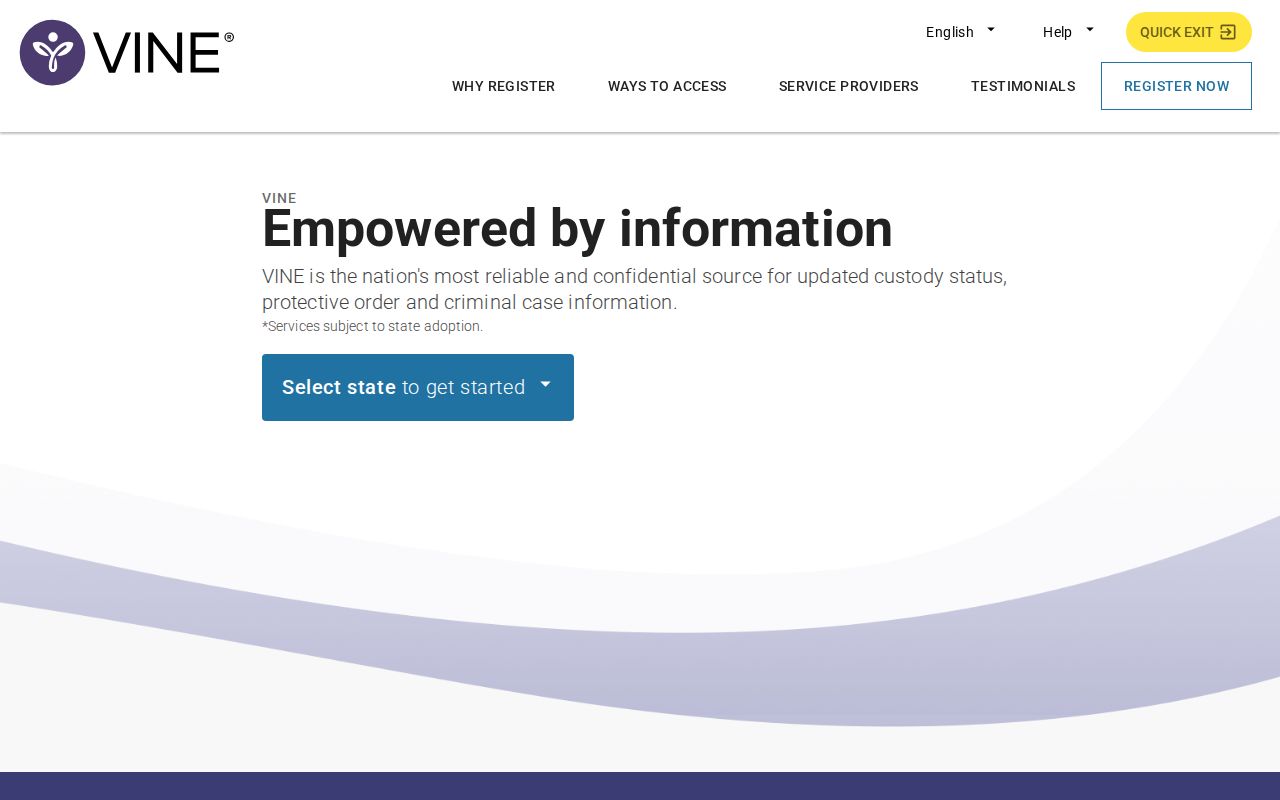
A one-person custody check, never a Custer County arrest gallery.
Check a Custer Arrest on VINE
Enter exact identity details whenever you can. One common name can pull up several records. A single spelling difference can also hide the right Custer arrest, so match jurisdiction, facility, status, and event details before you act.
- Open VINELink and select Idaho as the state County.
- Choose the person or offender search offered by the live interface.
- Enter the name or other identifier that the current form accepts.
- Review all possible matches and compare the jurisdiction and identifying details.
- Open the matching custody record and note its status and update information.
- Confirm urgent or unclear information with the Custer County Jail or source facility.
A VINE match reflects the custody record feeding the system. It shows where the system says the person is held. Nothing in it proves where the arrest happened. The charge may not read the same, either. When you move from VINE to sheriff or court records, keep the person's name, agency, date, and case number together.
Custer VINE Result Fields
The live vendor interface can change without notice. When a record is present, the result may show several custody fields.
| Possible field | How to read it |
|---|---|
| Name or identifier | Use it to distinguish possible matches |
| Custody status | Shows the status reported by a participating facility |
| Facility or jurisdiction | Identifies the system supplying the event |
| Event message | May describe release, transfer, or another status change |
| Update detail | Helps judge how current the record may be |
| Registration control | Starts alert enrollment when the record is eligible |
A release event means the reporting facility says the person left its custody. Holds may remain. Cases can stay open. A facility transfer may move the person into another jail or state system while the criminal case continues.
Register for Custer Custody Alerts
Registration starts from an eligible live record. The interface may offer phone, text, or email alerts, and Idaho guidance says phone registration uses a four-digit PIN. Keep that PIN private. It confirms receipt and can stop repeated calls.
- Open the matching person’s VINELink custody record.
- Select the notification or registration option shown for that event.
- Choose a phone number, text number, or email option that the interface offers.
- Create and retain the four-digit PIN when phone registration requires it.
- Review the event types and confirm enrollment.
IDOC victim-services guidance says a phone notice may repeat every two hours for 48 hours until the PIN is entered. Multiple contact methods may be allowed. The live form controls the details. Read its current terms and prompts instead of trusting an old screenshot.
Custer VINE Limits and Verification
VINE is not a universal arrest database. A person can be released before a record appears, booked in a system with a delayed or different integration, transferred, or listed under another spelling. Outages happen too. No match does not prove the person was never arrested or is out of custody now.
Federal Bureau of Prisons custody sits outside VINE entirely. Immigration detention runs through a separate ICE locator, and DHS-VINE is distinct from Idaho VINE. IDOC covers state prison, probation, and parole records. Each source carries its own custody scope.
For the early hours after a Custer arrest, before VINE updates, the Arrested Today page gives the sheriff confirmation path. Never use an alert to confront, follow, or approach a person.
Custer Arrest Alerts Are Not Dispositions
An alert reports a custody event. Everything after that belongs to the courts. Idaho iCourt and the Custer County court clerk provide the public docket path after filing. Match the court party, case number, dates, and agency to the custody record. Cases continue after release. Transfers can come before the next court event. Read VINE, sheriff records, and court records side by side, since their roles differ.
Test Custer VINE Before Registering
Custer participation still has no county confirmation. The live Idaho search is the local test. If a named record appears and matches the right jurisdiction, use the registration control. If not, ask the sheriff whether the jail sends events to VINE and what other notification route exists.
One failed name search proves nothing. Spelling, timing, a release before upload, or the custody location could explain it. One good match proves little either. Coverage and vendor integrations shift over time.
When a VINE result is missing, late, or unclear, the official Custer County Sheriff page is the local fallback.
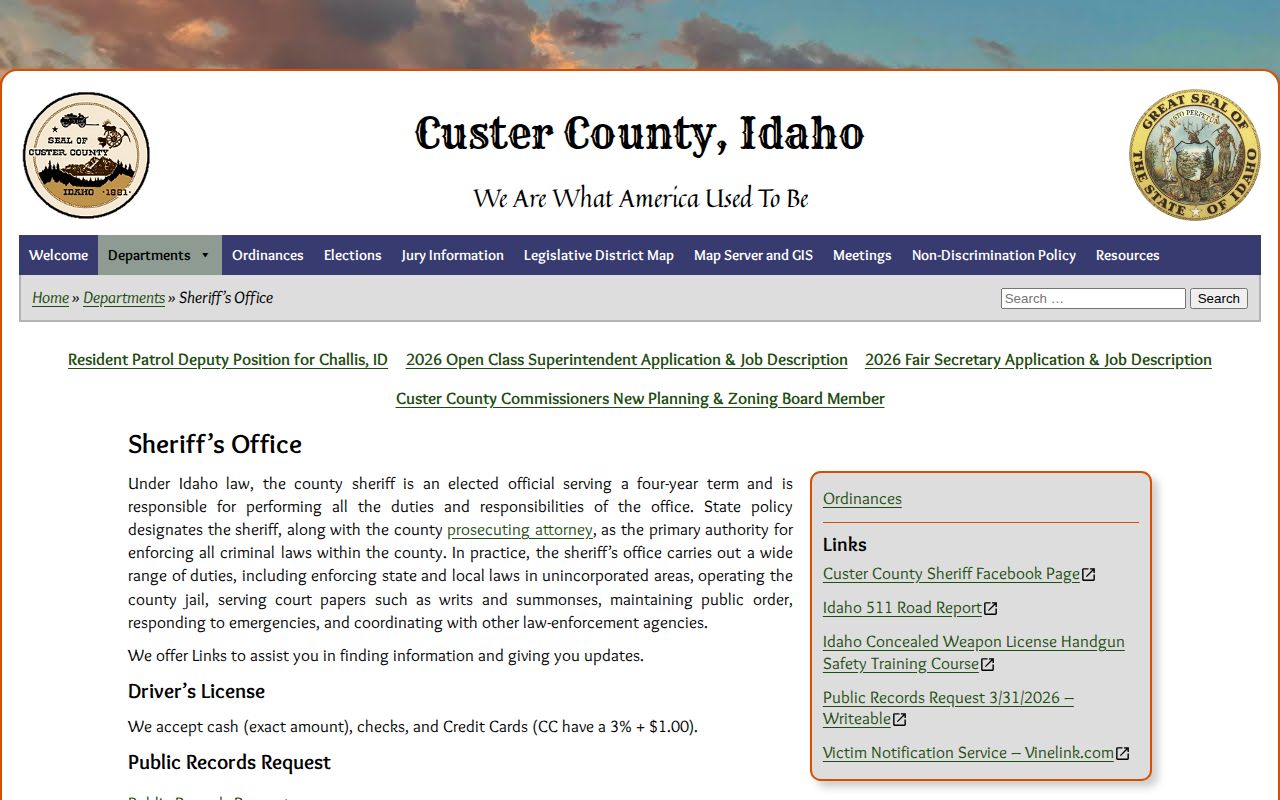
Try the Custer County search before you sign up anywhere. The county page names the sheriff and the jail role. It makes no promise that every local custody event flows into VINELink. Idaho VINE is the state's official notification channel. Even so, no local page confirms full feed coverage. Treat an alert as one part of a broader contact plan, not the whole thing. A phone or email notice can lag behind a facility feed, vendor processing, device settings, or a stale address. Keep the sheriff's office number close, and confirm urgent status with the holding facility directly. If a notice points to an immediate threat, use the proper emergency channel instead of waiting on another automated message.
Know what each service actually tracks. VINE follows a participating custody event. Idaho iCourt tracks the public court case. A release from jail does not close a case. A new hearing does not prove anyone is still in custody. Keep a case number, facility name, and event date handy so the two records stay aligned. IDOC adds another layer. Someone under state prison, probation, or parole may show up through the state system even after a local Custer arrest. That is still not a county booking feed. Federal prisons and immigration detention sit outside Idaho VINE entirely.
Shared names call for a pause. Compare jurisdiction and any other identifiers before registering. A mismatched alert creates confusion and hands your contact details to a service you never needed. The live portal decides which identifying fields and delivery options exist.
Missing record? Write down the spelling and search time first. Then call the jail. Ask whether the person was booked, released, transferred, or held elsewhere, as far as staff may lawfully confirm. A written booking-record request builds a durable event record. VINE stays the channel for future notice if an eligible match appears later. Expect more than one type of message. Read each for the named facility, the event, and the effective time. A transfer notice and a release notice mean different things. Save your registration details. Go back to the facility when an alert seems unclear or conflicts with a direct confirmation.